Question about tongue exercises
I am using your Myo Manual Treatment Program with my clients and have run in to a few other questions if you have time. I have a student who successfully eliminated his finger sucking and guitar pick sucking habit recently and has made very nice progress with phase 1. I wanted to understand the purpose of the ‘side sweeping’ exercise. Is it necessary if he is demonstrating an accurate bowl that he can maintain for 15 seconds? I am guessing it is not, but wanted to understand the purpose. I noted mild lower lip weakness during our evaluation on the Myo Lip Meter, but this is also a child who sits with his mouth open most of the time. Would you recommend that I do most of the lip exercises with him, or focus on the Battle Button exercise. I want to make sure that I am thorough and that I understand the purpose of all the exercises. Lastly, he has been able to demonstrate an appropriate /s/ sound in isolation, which is exciting for him! He has good tongue tip to spot placement and asked me last week to show him how to do it. Would you, at this point in the program, begin working on the /s/ sound in combination with the lip strengthening, or is it too soon? Also, can I begin to address resting posture with him even though we have not improved his suctioning? I am not sure if there is an exact method to how to proceed with each patient, or go with what I am seeing clinicallly. I am guessing it is the latter but without any experience at this, I am not sure.
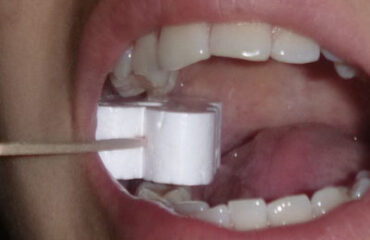
It appears that you have the first edition of the Myo Manual. The second edition answers the types of questions you mentioned. It more thoroughly explains the purposes of each exercise, gives criteria for passing them, and much more. The “Side Sweeping” is one method for creating the bowl. I have found that the Taco Tongue is quite effective most of the time and might be all that you need when a client requires practice in this section. In this case since he is demonstrating an accurate bowl that he can maintain for 15 seconds, these particular exercises are not needed. About the mild lower lip weakness, it depends on how weak the lips were when he was tested with the Myo Lip Meter. I usually give the Lip Massages and the Battle Button Exercises to cover compression, “strengthening,” and resistance. Again, depending upon age and ability, if he can do Lip Massages properly and easily, it usually takes only a second per each, so I would give 50 of them twice or three times as day, depending on initial “baseline” measurement score. If he has passed or maximized all of Proficiency Exam One requirements, you can begin to work on /s/ sounds with a patient. I have some suggestions about /s/ at this point. Does he have an interdental lisp? Do the La-Ta-Da-Na if you have not already done so. Do word Lists #1 and #2, of course avoiding all mandibular assistance to the tongue. Use the whispered /t/ exercise and get him to master it well. THEN: get him to extend that whispered /t/ into a long “t” which is essentially a /tsssss/, but refer to it as “long t”. Then go to vowels before the “long t” and then go to words (with no competing /s/ or /z/) that end with “ts” such as “batsss” catssss potssss etc. Then put those words into sentences without any competing /s/ or /z/ or other error sounds he may have. Then get co-articulation going: For example, sentences such as My mom bought two catssssssSunday morning. Tommy putssssssSome candy on the table every day. etc. Once you get to this point, it is easy ssssssailing! I love it! Even beyond your years of experience, someone like you with eyes wide open, brain willing and ready to absorb, courage to probe and experiment based on what you observe….you are right about looking at each patient and making decisions based upon all you know at any given time. So, for severe resting posture cases, I do consider initiating lip training immediately and then focus on the speech, most especially if the orthodontics has begun. Otherwise, keep in mind that the suctioning exercises help saliva control. If he has poor suctioning and you merely have him put lips together and tongue to spot, what can he do with all that saliva? He’ll push his tongue forward and/or open his teeth each time it accumulates and he has to swallow. Look closely and see if he can handle it and then make your determination.